
In light of the recent incidents involving scooters from prominent electric mobility brands bursting into flames, the subject of electric vehicle (EV) safety has come under the spotlight. As many as 20 electric scooters of Nashik-based Jitendra EV Tech caught fire after being loaded on a transport container. While no one has been reported injured, the company said it is conducting an investigation to find the 'root cause' of the fire.

In a rare face off, captains of the auto industry have hit out at the government for not walking the talk. At an industry event in the capital on Wednesday, R C Bhargava, chairman of India's largest carmaker Maruti Suzuki, and Venu Srinivasan, chairman of TVS Motor, questioned the government's intent to support the auto sector. Revenue secretary Tarun Bajaj sat in the audience listening, before his turn came to counter them.
The proxy advisory firm's latest comments come within days of Maruti saying that it expects to save about Rs 10,500 crore (Rs 105 billion) in the first 15 years by not investing in the Gujarat facility.

The Russia-Ukraine conflict, which has spooked financial markets globally, will set the tone for Dalal Street this week amid concerns over energy prices and foreign fund outflows, analysts said. Participants will also track key macroeconomic signals like GDP estimates and PMI data for manufacturing and services sectors to be announced this week, they added. "With earnings season behind us and given the overall sentiments, markets are expected to move in sync with global peers in the coming week. "A close eye will be kept on the developments concerning the Russia - Ukraine crisis and considering the inflation overhang, market participants will also observe movements in energy prices," said Shrikant Chouhan, Head of Equity Research (Retail), Kotak Securities Ltd.

Close to half a dozen more three-row premium mid-size models are expected to hit the road over the next two years.

Chinese players form a major part, around 20 per cent of the auto expo this year, despite a slowdown in the Indian automobile sector in the last one year. Over two dozen top officials from various companies were planning to participate in the event, besides a group of journalists.

Prime ministers turning up with such frequency to launch trains is an indication of the political mileage resident in public transport. Will our railways step out of the government's shadow? After all, they are the ones manufacturing trains and running them, notes Shyam G Menon.

Lenders have become worried as some dealers were not using the money provided to them for car financing.

Maruti Suzuki said there are many reasons for this downturn in the auto market such as liquidity crunch, increased prices of products due to regulatory issues, higher taxes and rise in insurance rates.

You can make all the speeches you want, you cannot argue against 39 straight months of slowing, observes Aakar Patel.

China has zoomed past the United States as the world's biggest auto maker and market with sales exceeding 13.64 million units last year, an industry association said in Beijing on Monday.

Passenger Vehicle makers are likely to see their cumulative earnings at an operating level erode by Rs 1,800-2,000 crore in the year ending March 2022 on account of the shortage of semiconductors, rating agency Icra said at a webinar on Wednesday. The industry, it pointed out, is estimated to lose production of 500,000 units at the end of FY22 due to the chronovc shortage the chip, which is critical in safety, entertainment and the various other smart features of a car. "In absence of the chip crisis, the industry volumes are likely to have exceeded the all-time peak annual volumes." Icra has pared its growth estimates for the PV market from the earlier 10-14 per cent to 8-11 per cent now in FY22.
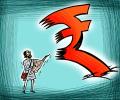
Historically, there has been no correlation between growth in bank credit to industry and lower benchmark interest rate

M&M also saw its domestic passenger vehicle sales grow by 1 per cent, while Toyota Kirloskar Motor witnessed a decline in its PV sales.
The economy segment of India's car market is unlikely to revive soon term as inflation and prices prompt buyers to defer purchases. The share of entry-level cars in the passenger vehicle market dropped to the lowest in seven years at the end of the Financial Year 2021-22 (FY22). A recovery in the segment will be largely driven by the overall economic growth, improvement in income levels, and easing of semiconductor shortage, say carmakers and analysts.

India's biggest car maker Maruti Suzuki said on Tuesday that its vehicle production in September will tumble by 60 per cent due to chip shortage. The company, which had earlier cut down production at its Gujarat plant, said the chip shortage will hit production in Gurugram and Manesar plants, effectively forcing the automaker to cut production by 60 per cent. Owing to a supply constraint of electronic components due to semiconductor shortage, the company is expecting an adverse impact on vehicle production in September in both Haryana and its contract manufacturing company, Suzuki Motor Gujarat Pvt Ltd. (SMG) in Gujarat.

The dream run in China's car market is likely to come to a screeching halt in 2011 after Beijing announced the withdrawal of incentives on small cars with a 'Made-in-China' tag and imposed restrictions capping the number of new vehicles allowed on the roads.
RBI policy, macro data, company earnings to decide market course this week: Experts
To be able to tide over the current crisis, automobile manufacturers have waged a war against all cost heads.

With car penetration of around 22 per 1,000 population, India continues to be a big opportunity to sell cars, especially in rural areas.
The lockdown in Maharashtra will have a catastrophic impact on April sales, as dealers will not be able to realise the potential of festivities like Ugadi, Gudi Padwa, Baisakhi and Poila Boishakh.
Component makers don't see any recovery yet, but manufacturers believe the end of poor sales is nearing its end.
The Tata group is looking to make a foray into semiconductor (also known as chips) manufacturing and it has set up a business to seize the opportunity, Chairman N Chandrasekaran said on Monday. "At the Tata group, we have already pivoted into a number of new businesses like electronics manufacturing, 5G network equipment as well as semiconductors, in all probability," he said while speaking at the annual general meeting of the IMC Chamber of Commerce and Industry. Chandrasekaran said global supply chains, currently heavily dependent on China, would see a big change in a post-pandemic world with businesses shifting their reliance to other countries.
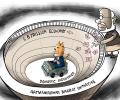
The Indian economy is on the path of a durable recovery on the back of conducive monetary and credit conditions, the global headwinds notwithstanding, said a Reserve Bank of India (RBI) article on the state of the economy. Domestically, there have been several positives on the COVID-19 front, in terms of reduced infections and faster vaccinations, the article published in the RBI Bulletin November 2021 added. The Indian economy, the article said, is clearly differentiating itself from the global situation, which is marred by supply disruptions, stubborn inflation and surges of infections in various parts of the world.

With more and more Indians buying automobiles on the back of a rise in income and easy loans, car majors too are launching newer models to offer a wide choice to prospective customers.

The entire range of Hyundai's diesel cars - from compact ones to SUV models, including the soon-to-be-launched Aura - will be eco-friendly.

What explains India's love affair with SUVs? They are not exactly "value for money" -- the watchword for brands across segments -- nor always practical. Is it for the badge value? Or the butch imagery associated with SUVs? Maybe both, says Alokananda Chakraborty.

The operating margin of India Inc is likely to drop in the December quarter with a 100-120 bps year-on-year decline, as 27/40 sectors are set to see crimped margins despite higher revenue, according to a report. Surging commodity prices and price hikes may help companies report a healthy 16-17 per cent revenue growth to Rs 9.1 lakh crore during the quarter ending December, the Crisil report said on Tuesday. Software major TCS will open the earnings season Wednesday.

The increase in PV sales in September was driven by festive season purchases, with SUV models like Maruti Suzuki's Brezza, Hyundai Creta, Mahindra Scorpio, Ford Ecosport and Honda W-RV witnessing good traction

Ratings agency ICRA on Wednesday revised downwards growth forecast for the domestic passenger vehicles industry to 8-11 per cent in the ongoing fiscal from the earlier estimate of 14-17 per cent on account of the ongoing semiconductor shortage. Similarly, for the two-wheeler segment, it said the volumes are expected to contract by 1-4 per cent in FY2022 against an earlier prediction of 6-8 per cent growth as affordability and demand sentiments of target clientele was hit sharply by the second wave of COVID-19 pandemic. With around 5 lakh units of production lost by various automakers in the passenger vehicles segment due to the semiconductor shortage, ICRA said the earnings loss for the OEMs (Original Equipment Manufacturers) could be around Rs 1,800 crore to Rs 2,000 crore for the ongoing fiscal.

First off the block will be a new multi-purpose vehicle which is being co-developed with Toyota - Suzuki's alliance partner. The model will also wear a Toyota badge.

Auto companies are now grappling with a slowdown in sales, triggered by pent up demand due to the COVID-led lockdown easing a bit and supply-side issues for raw material.

Investors must be prepared to believe that things will get better eventually, no matter how bad the current situation may look. If you don't possess this optimism, you will not possess the courage to invest and if you don't invest, you don't give yourself any chance to get wealthy, says Devangshu Datta.
Automobile sector posted mixed results in March with some registering moderate to big jump in sales while others scored low as far as sales are concerned.

The luxury car market leader will be producing the new-generation cars, sedans, SUVs, and AMG performance cars at one facility.

From Hyundai to Tata Motors, automakers are staring at a bleak future. With no succor provided in the Budget, the pain for companies is likely to continue for the next two quarters.
The government on Saturday said it is expected to take a decision on privatisation of Delhi and Mumbai airports at the meeting of the Empowered Group of Ministers on January 24.

Ford is among several multinational automobile companies in India for whom exports now bring bigger volumes than local sales.
SIAM said it expected 10-12 per cent growth in 2012-2013.

Higher exports will also drive up volumes, as the company seeks to avail of the benefits under the government's recently announced production linked incentive scheme.
